
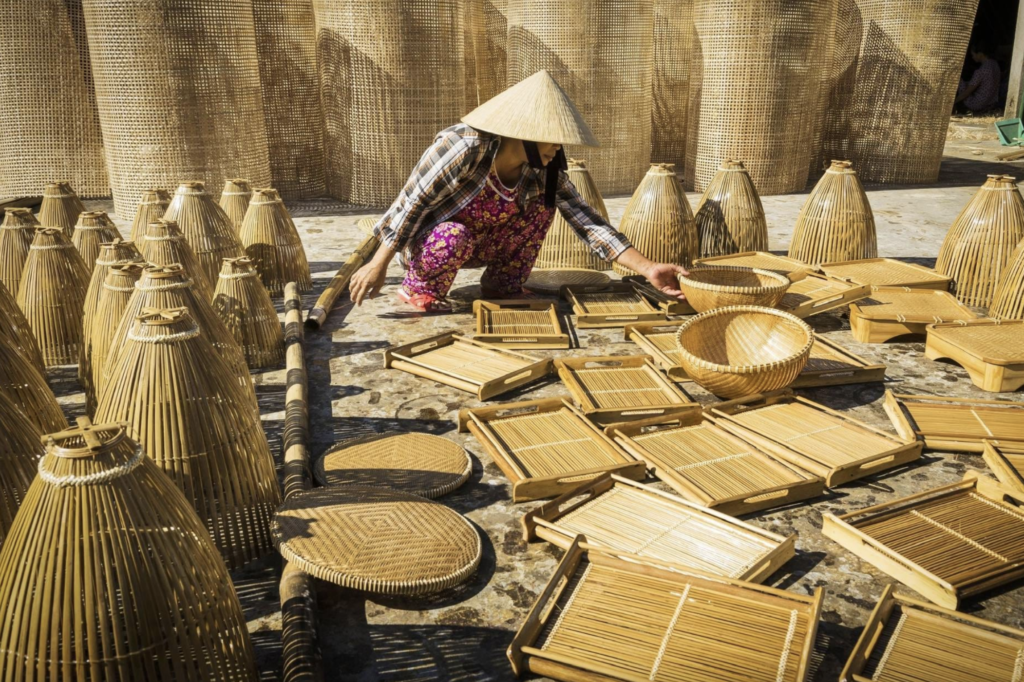
Bamboo handicrafts have become an increasingly important product category in global home decor and lifestyle markets. Valued for their natural appearance, sustainability, and handmade quality, bamboo products from Vietnam are widely sourced by international buyers for retail, hospitality, and wholesale distribution.
For importers, wholesalers, and sourcing professionals, understanding export requirements, quality standards, and supplier capabilities is essential when selecting reliable bamboo handicraft partners. This article outlines key considerations when sourcing bamboo handicrafts for export, with a focus on Vietnamese production. To understand the full sourcing landscape, buyers can explore bamboo handicrafts in Vietnam, including materials, production regions, and export-ready applications. Most export-ready production is supported by networks of bamboo craft villages in Vietnam, ensuring skilled labor and consistent output capacity.
Global Demand for Export-Ready Bamboo Handicrafts
International demand for bamboo handicrafts continues to grow as consumers shift toward eco-friendly and natural materials. Bamboo products are commonly used in:
-
Home decor collections
-
Storage and organization solutions
-
Hospitality and hotel interiors
-
Sustainable lifestyle brands
Markets in Europe, North America, Australia, and parts of Asia increasingly favor bamboo handicrafts due to their renewable raw materials, artisanal value, and adaptability to modern design trends. Popular export items include bamboo baskets from Vietnam, widely used in home decor, storage, and hospitality interiors.
Vietnam has emerged as a key sourcing destination thanks to its abundant bamboo resources, skilled artisans, and long-standing craft traditions.
Quality Standards for Export Bamboo Handicrafts
To meet international market expectations, bamboo handicrafts must comply with consistent quality standards throughout production. Key quality factors include:
Material Quality
-
Mature bamboo harvested at the correct age
-
Proper treatment to prevent mold, insects, and cracking
-
Even color and stable moisture content
Craftsmanship
-
Clean cutting and smooth finishing
-
Tight weaving or precise assembly
-
Consistent shapes and dimensions across batches
Structural Durability
-
Strong joints and reinforced stress points
-
Products able to withstand handling, packing, and long-distance shipping
- Consistent quality depends heavily on standardized bamboo processing and treatment to prevent mold, insects, and cracking during export.
Buyers often request pre-shipment inspections or sample approval to ensure quality consistency before mass production.
Bamboo Processing and Treatment for Export Markets
Proper bamboo processing plays a critical role in export suitability. Common treatment methods include:
-
Natural drying or kiln drying to control moisture
-
Anti-mold and anti-insect treatments
-
Heat treatment or carbonization for enhanced durability
These processes help bamboo products meet international import regulations while extending product lifespan during storage and use.
For buyers, understanding bamboo processing methods is essential when evaluating supplier reliability and long-term quality performance.
Compliance and Export Requirements
Export-ready bamboo handicrafts must comply with various international regulations depending on destination markets. Common requirements include:
-
Phytosanitary standards
-
Fumigation or heat treatment certification
-
Packaging regulations for natural materials
-
Product labeling and country-of-origin compliance
Suppliers experienced in export markets are typically familiar with documentation such as commercial invoices, packing lists, certificates of origin, and shipping marks.
Working with export-experienced producers reduces delays and minimizes customs-related risks.
Customization and OEM Capabilities
One advantage of sourcing bamboo handicrafts from Vietnam is flexibility in customization. Many suppliers offer:
-
Custom sizes and shapes
-
Design adaptations for specific markets
-
Private label and OEM production
-
Mixed-material combinations (bamboo with fabric, metal, or leather)
This flexibility allows buyers to develop exclusive product lines while maintaining consistent quality and pricing.
Why International Buyers Choose Vietnam for Bamboo Handicrafts
Vietnamese bamboo handicraft suppliers are favored by global buyers for several reasons:
-
Abundant and renewable bamboo resources
-
Skilled artisan labor with generational expertise
-
Competitive pricing compared to mass-produced alternatives
-
Strong adaptability to modern export standards
In addition, Vietnam’s established craft villages provide scalable production capacity without sacrificing handmade quality.
Long-Term Sourcing and Partnership Considerations
Successful bamboo handicraft sourcing is built on long-term relationships rather than one-time transactions. Buyers should evaluate suppliers based on:
-
Production capacity and lead times
-
Communication and sample development speed
-
Quality control processes
-
Export experience and documentation support
Building stable partnerships enables smoother scaling, consistent quality, and better cost control over time.
Conclusion
Bamboo handicrafts for export represent a strong opportunity for buyers seeking sustainable, handmade, and commercially viable products. With proper material treatment, quality control, and export compliance, bamboo handicrafts from Vietnam continue to meet the evolving needs of international markets.
For importers and sourcing professionals, understanding production standards and supplier capabilities is key to building successful, long-term bamboo handicraft supply chains.