
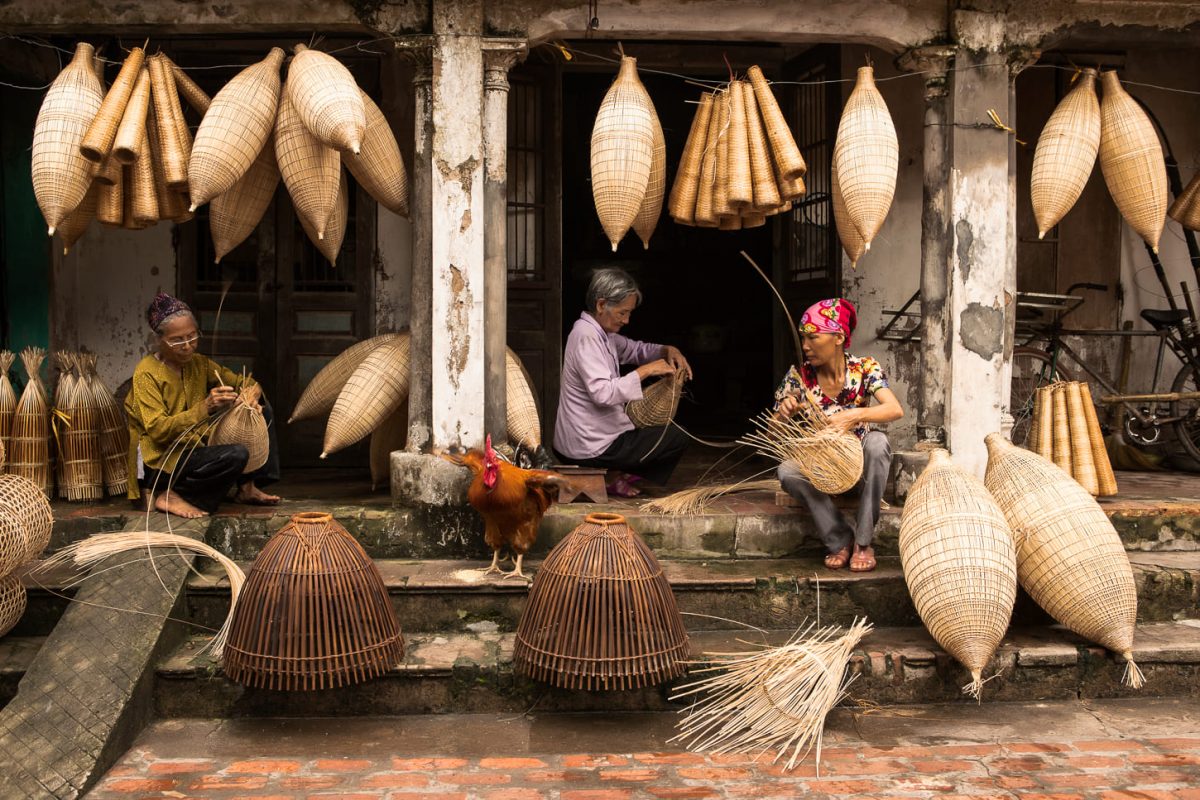
Spun bamboo products are widely appreciated for their natural beauty, durability, and handcrafted value. Among them, spun bamboo bowls are one of the most popular items used for home décor, serving, and storage.
About a month ago, I had the opportunity to visit Cat Dang craft village, a well-known traditional village specializing in spun bamboo products. Located approximately 80 kilometers from Hanoi, Cat Dang is surrounded by bamboo forests and small rural roads, creating the ideal environment for bamboo craftsmanship.
During my visit, I witnessed Vietnamese artisans working meticulously by hand. Observing the production process helped me realize that creating a spun bamboo bowl is a complex and labor-intensive journey. From raw bamboo to the finished product, the bowl goes through multiple careful steps to ensure quality and durability.
Below is an overview of the 10 main steps involved in producing a spun bamboo bowl.
Step 1: Selecting and Harvesting Bamboo
Fresh bamboo is harvested from bamboo forests after 3–5 years of growth, when the bamboo is mature, tall, and strong. Selecting high-quality bamboo at this stage is essential, as it directly affects the durability and shape of the final product.
Step 2: Soaking Bamboo for Natural Treatment
The harvested bamboo is soaked in water for 3–4 months at an average temperature of around 30°C.
This natural soaking process helps:
-
Prevent insects and pests
-
Increase durability
-
Improve resistance to cracking
After soaking, the bamboo is removed and dried under natural sunlight for approximately 7 days.
Step 3: Splitting Bamboo into Thin Strips
Once dried, the bamboo is split into smaller pieces and then further processed into thin bamboo strips. These strips will later be used to create bamboo threads suitable for spinning.
Step 4: Creating Bamboo Threads
The bamboo strips are refined and spun into fine bamboo threads. This step requires experience and precision to ensure the threads are flexible, smooth, and uniform in thickness.
Step 5: Shaping the Bowl by Spinning
Using traditional spinning techniques, artisans shape the bamboo threads around a mold to form the bowl’s structure. This stage defines the size, depth, and overall form of the spun bamboo bowl.
Step 6: Drying and Stabilizing the Shape
After shaping, the bowl is left to dry naturally. This step helps stabilize the structure and ensures the bowl retains its form during long-term use.
Step 7: Trimming and Refining
Excess bamboo fibers are trimmed, and the surface is carefully refined. Artisans smooth the edges and check the symmetry of the bowl to ensure a clean and balanced appearance.
Step 8: Surface Finishing
Depending on the design and usage purpose, the bowl may receive a natural coating or protective finish. This enhances durability while preserving the natural bamboo texture.
Step 9: Quality Inspection
Each spun bamboo bowl undergoes a thorough quality check to ensure:
-
Structural stability
-
Smooth surface
-
Consistent shape and size
Only products that meet quality standards move to the final stage.
Step 10: Packaging for Distribution
Finished bowls are carefully packed to protect them during transportation. Proper packaging ensures the products arrive safely for wholesale, retail, or export markets.
Why Spun Bamboo Bowls Are Valued in Global Markets
Spun bamboo bowls are favored by importers and retailers because they are:
-
Handmade and eco-friendly
-
Lightweight yet durable
-
Suitable for home décor, serving, and storage
-
Produced using traditional Vietnamese craftsmanship
These qualities make spun bamboo bowls a popular choice in international wholesale and sustainable home décor markets.